Prepare data
XDS can't work with h5-format images, so you need to convert them to cbf format before processing. On macOS, eiger2cbf is a useful tool for this.
For example:
eiger2cbf path/to/your/h5_master_data 1:720 out # convert all the 720 images to cbf format
X-Ray data processing
Process with XDS
Install XDSGUI following these instructions.
Run XDSGUI in the terminal.
BASHcd path/to/your/images xdsguiLoad the image and generate the XDS.INP file:
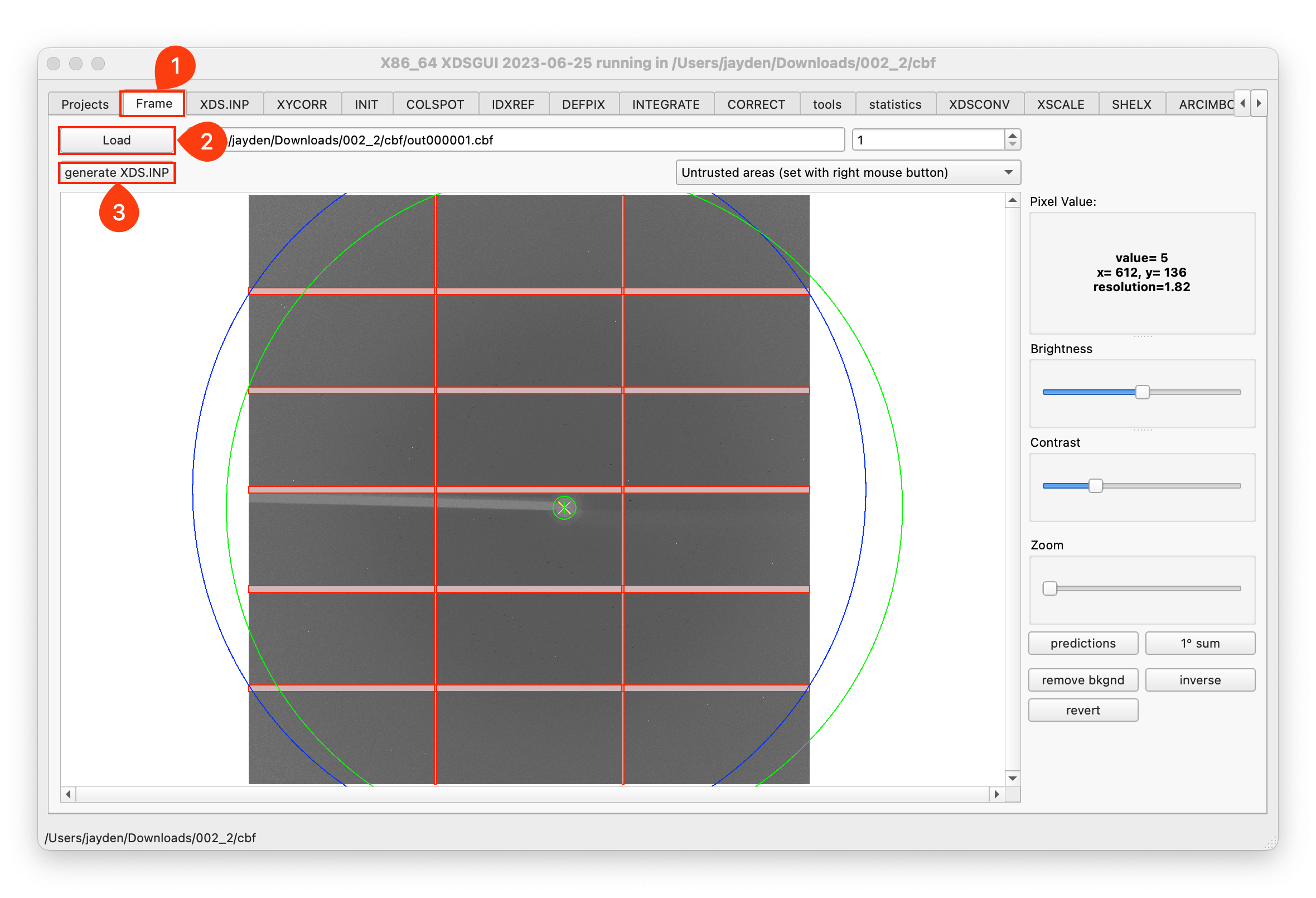
Load your imageModify the XDS.INP file to meet your needs, then click
Run XDS.:::caution
If you collected your data at the 10U2 beamline at SSRF, change the
ROTATION_AXISparameter to0 -1 0.:::
Check the results on the CORRECT page.
Process with Xia2
You can use Xia2 in two ways: within CCP4, or by installing the latest xia2/DIALS bundle as described on this website.
Use it to process your data:
BASHcd path/to/images xia2 pipeline=dials-aimless ./ goniometer.axes=0.000000,1.000000,0.000000 xia2.settings.resolution.d_min=2
Process with autoPROC
Request a license and install autoPROC as described on this website.
Use it to process your data:
CodeBlock Loading...
Structure determination
Validate the data
Use the
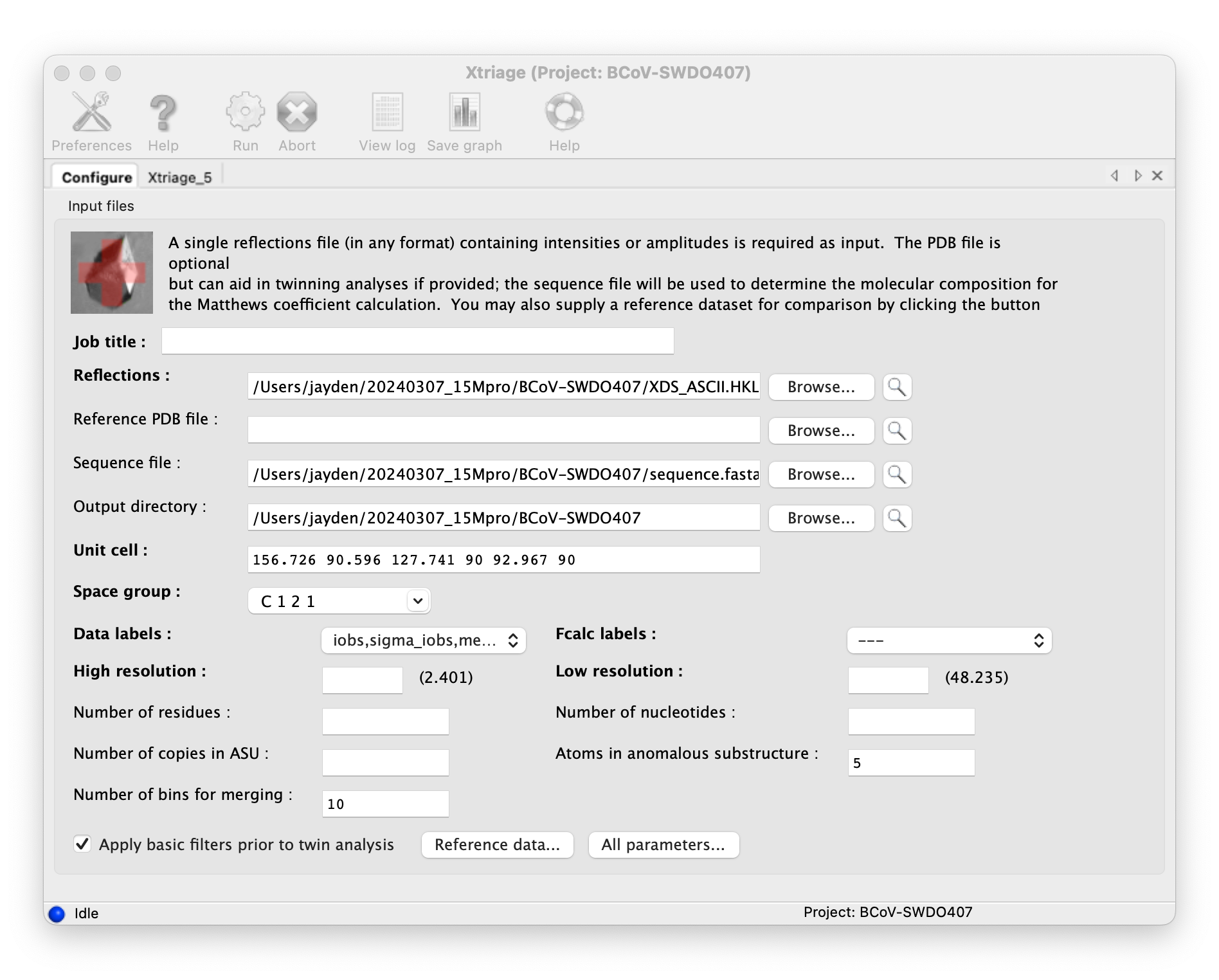
XDS_ASCII.HKLfile in the autoproc directory as the diffraction file.Validate the data with Phenix Xtriage: load the diffraction file into it and run.
Molecular replacement
Use the
XDS_ASCII.HKLfile in the autoproc directory as the diffraction file.Get the template model:
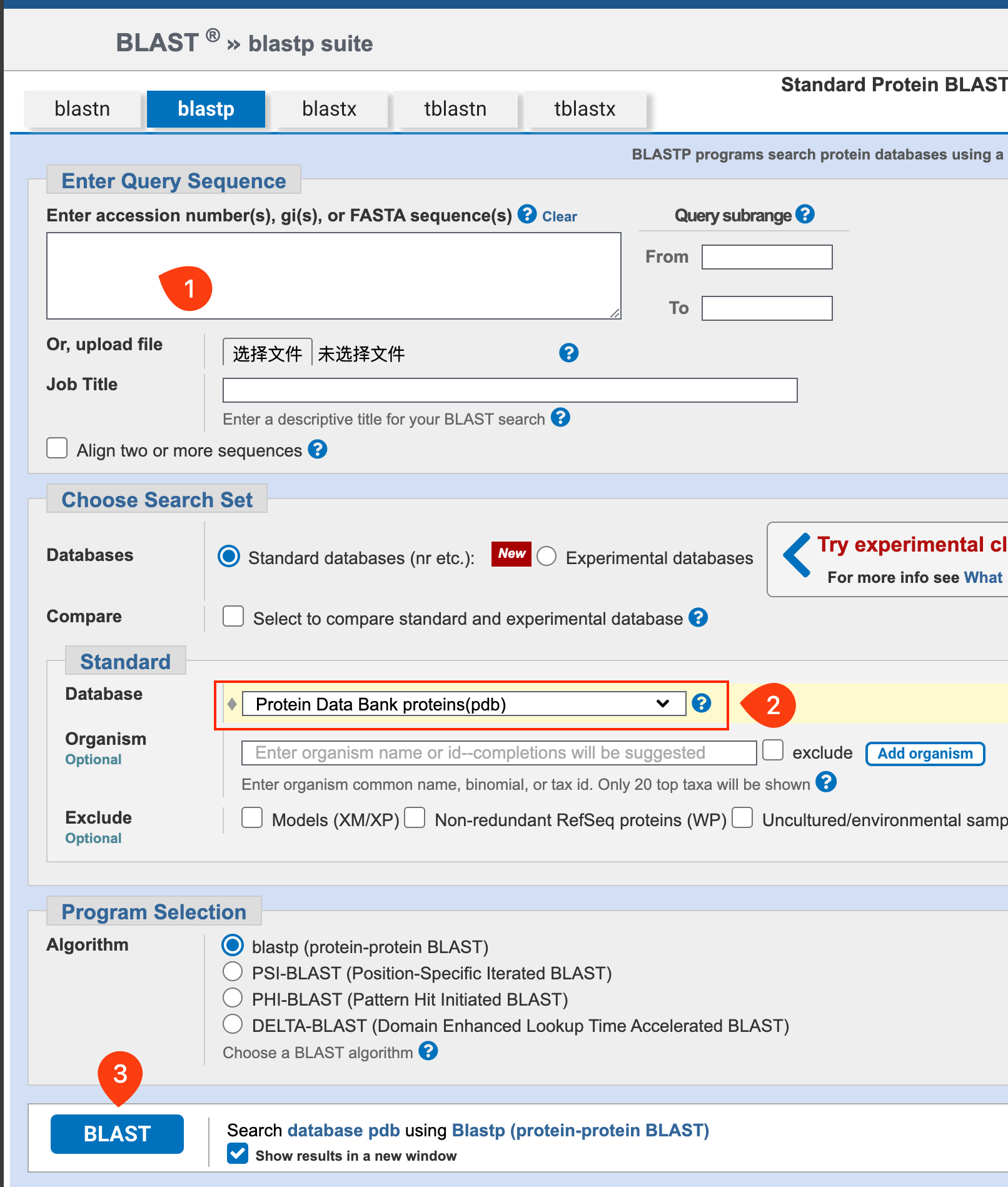
- BLAST your protein sequence against the PDB database, select a suitable structure, and download the PDB file.
- After downloading the template model, edit it in PyMOL to remove extra copies and water molecules.
Determine how many copies are in the ASU (asymmetric unit):
You can get this number from the Xtriage output.
Or use the cell content analysis tool in CCP4.
NoteYou can determine the number of copies from the solvent content. Generally, the solvent content of most biological macromolecular crystals is between 40% and 60%.
Run molecular replacement with Phenix Phaser-MR.
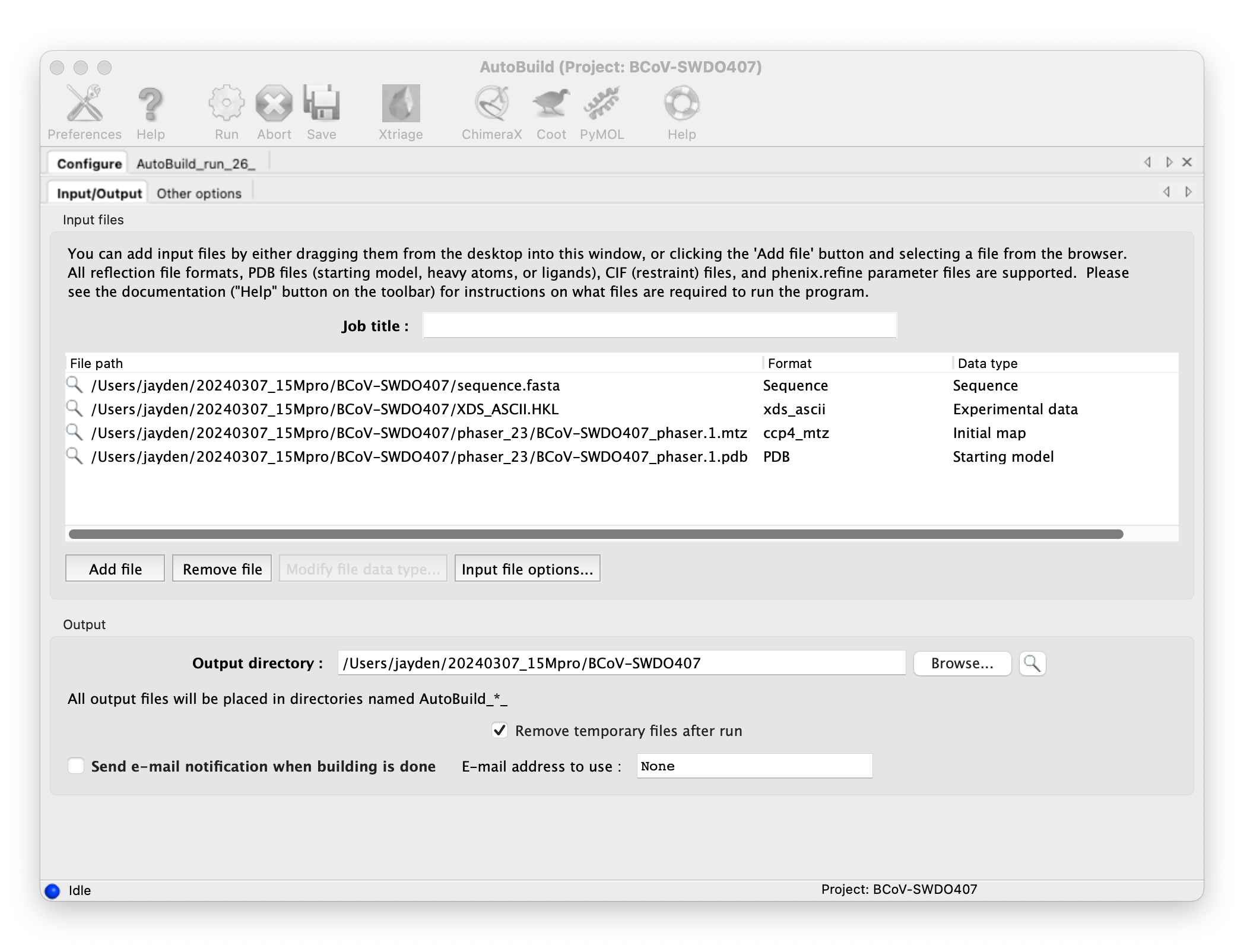
Build your model with Phenix AutoBuild: load the molecular replacement result and run it.
AutoBuildCheck the model from AutoBuild in Coot and refine it manually.